
Module 3 · 25 min
Finding leverage
Compare where an intervention acts before deciding what to change.
Watch & reflect · optional
Systems Thinking: Systemic interventions and their leverage
Linda Vanasupa · External learning resource
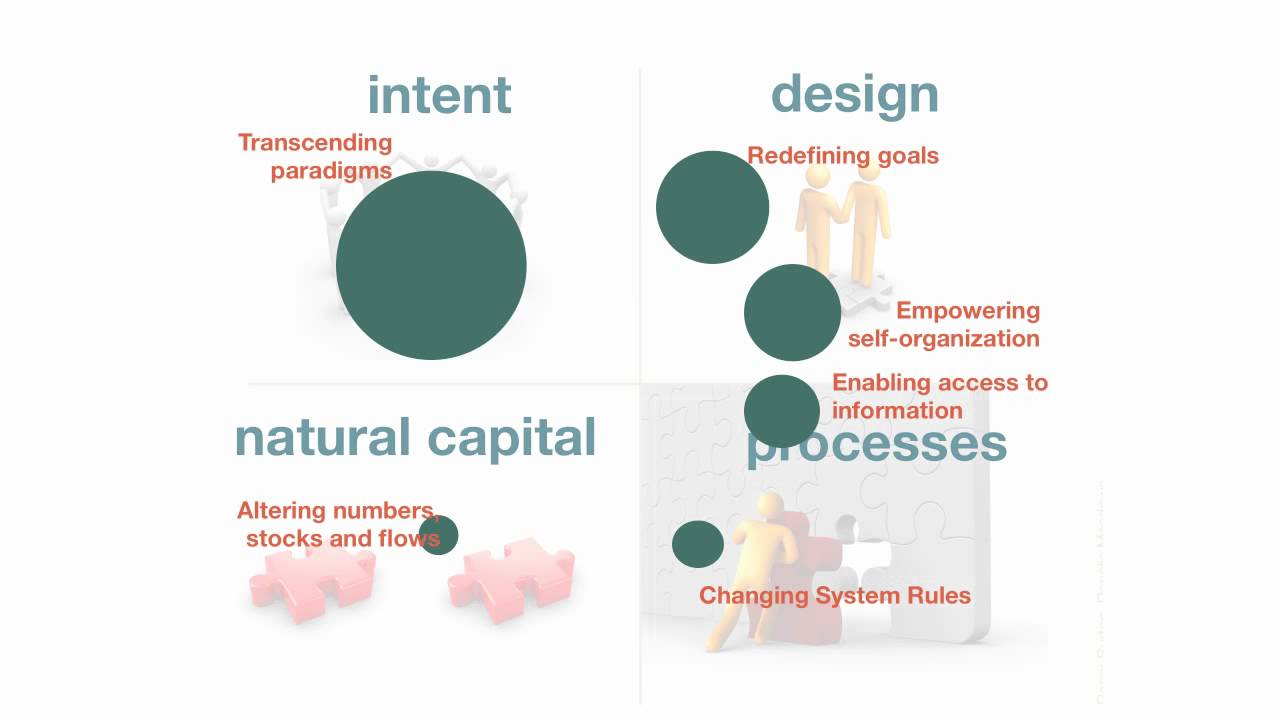
An educational explanation of intervention levels using Meadows’ framework. It supports the leverage exercise, not a prediction of which change will work in your setting.
Does your proposed change alter resources, information, rules or the system’s goal?
The hook
Two districts, same problem: health facility reports arriving too late to inform the quarterly allocation.
District A buys tablets for every facility, funds a data clerk at each, and runs a training programme. Cost: substantial. Reporting timeliness improves by a few days. Allocation decisions are unchanged, because the quarterly meeting is still held before the reports are compiled.
District B changes one thing. The allocation meeting moves from the first week of the quarter to the third, and the three indicators that actually drive the allocation are circulated to members two days before. Cost: the price of changing a recurring calendar invitation. Allocation decisions change immediately and measurably.
District A intervened on a parameter. District B intervened on an information flow. Both were competent. Only one found leverage.
[Illustrative composite, not a single documented case.]
The leverage ladder
Donella Meadows described twelve places to intervene in a system in Leverage Points (1999), with related discussion in Thinking in Systems (2008). Onetsa uses the five categories below as a teaching simplification, not a calibrated ranking of cost or effectiveness.
| Rung | Category | What you examine | Practical question |
|---|---|---|---|
| 5 | Parameters | Budgets, targets, staffing and equipment | Is a resource constraint limiting the work? |
| 4 | Flows and buffers | Process speed and reserves | Where does work accumulate or stall? |
| 3 | Information flows | Who receives evidence and when | Can the right people act on it in time? |
| 2 | Rules and incentives | What is rewarded, required or permitted | Do the rules support the intended behaviour? |
| 1 | Goals and mindset | What the system is trying to achieve | Does observed practice serve the stated purpose? |
The categories help you ask different questions. They do not establish that a cheaper intervention will be more effective. Test feasibility, costs, effects and unintended consequences in context.
Why resources receive the attention
Equipment, staffing and training fit familiar budget and procurement processes. Their delivery is visible and can be reported.
Changes to review routines, information flows or incentives may be harder to specify and assign to a work package. This can influence what gets funded.
Check whether your institution is addressing a genuine resource constraint or choosing the intervention that is easiest to procure.
Rung 3 done badly and done well
"Improve information flows" is where dashboards come from, which is why so many of them disappoint. The rung is right; the execution misses what makes it work.
Done badly: build a portal containing everything, available to everyone, all the time. Announce it. Train people on it. Wait. The portal is a pull mechanism. It requires the decision maker to know they have a question, know the answer exists, know where to look, and have time. Four conditions, all of which must hold at once, at the moment the window is open.
Done well: identify one decision, one decision maker, two or three numbers that would change their judgement, and get those numbers in front of that person at a fixed point before the window closes, in whatever form they actually read, which is frequently a printed page or a message, not a login. This is a push mechanism tied to a calendar. Its effect should be checked against an actual decision cycle, not assumed from the design.
Rung 2 is where data quality actually lives
Where figures are used to assess the people reporting them, incentives may affect accuracy. This does not mean verification is unnecessary or that all errors are intentional.
Investigate how reporting affects staff and how the data helps their work. Combine useful feedback, appropriate incentives, skills and independent checks. Test whether these changes improve accuracy.
The tool
List what your institution has done about one persistent problem over the last three years. Place each item on the ladder.
Then two questions. Where is the mass of your effort? And what is the cheapest thing you could do on rung 3 that you have never tried?
The tool · Place your interventions
Saved on this device as you type. It comes back in your systems brief at the end.
Onetsa · The Decision Window · Module 3
Place your interventions
onetsa.co · info@onetsa.co
What to take away
- Cost does not establish how much an intervention can change.
- Information flows are worth examining alongside budgets, equipment and rules.
- Make evidence available in a form and at a time decision makers can use.
- Investigate incentives alongside skills and verification when data quality is poor.
Check your understanding
Nothing here is recorded and there is no score. The questions are for you.